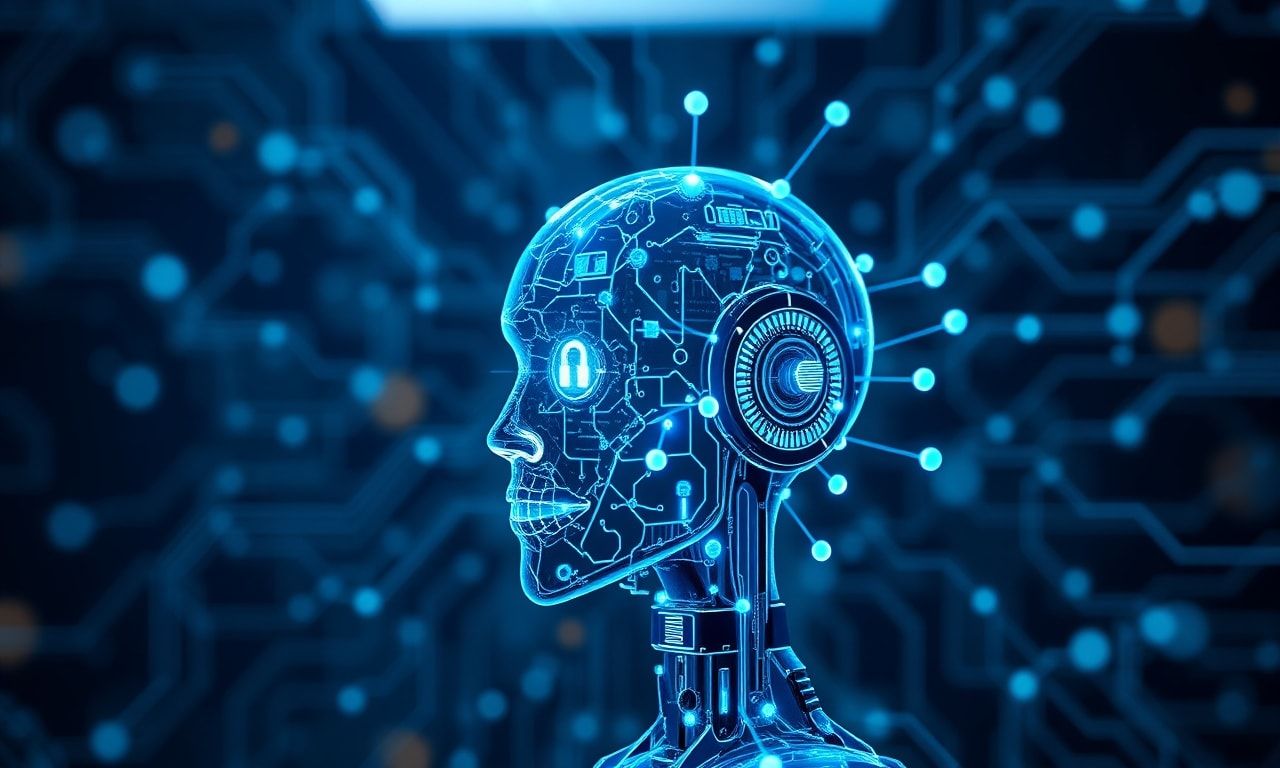
The Intersection of AI and Cybersecurity
The landscape of cybersecurity is undergoing a profound transformation, driven by the rapid advancements in artificial intelligence (AI). As cyber threats become more sophisticated, traditional security measures are increasingly inadequate. AI offers a promising solution by enabling systems to learn from data, identify patterns, and respond to threats in real-time. This synergy between AI and cybersecurity is reshaping how organizations protect their digital assets.
The Role of AI in Threat Detection
One of the most significant contributions of AI to cybersecurity is in threat detection. Machine learning algorithms can analyze vast amounts of data to identify anomalies that may indicate a cyber attack. These algorithms are trained on historical data, allowing them to recognize patterns and behaviors associated with malicious activities. For instance, AI can detect unusual network traffic, unauthorized access attempts, and suspicious file modifications. By leveraging AI, organizations can significantly reduce the time it takes to identify and mitigate threats, thereby enhancing their overall security posture.
Moreover, AI-powered systems can continuously learn and adapt to new threats. This adaptive capability is crucial in an environment where cybercriminals are constantly evolving their tactics. Traditional security solutions often rely on predefined rules and signatures, which can be easily bypassed by new and unknown threats. AI, on the other hand, can detect zero-day vulnerabilities and other advanced persistent threats (APTs) by analyzing behavioral patterns and contextual data.
The Impact of AI on Incident Response
AI is also revolutionizing incident response. Automated systems can quickly analyze the scope and impact of a security breach, providing valuable insights to incident response teams. This rapid analysis enables organizations to contain and mitigate threats more effectively. AI can also automate certain response actions, such as isolating affected systems, blocking malicious IP addresses, and deploying patches. By automating these tasks, AI reduces the burden on human analysts and allows them to focus on more strategic aspects of incident response.
Furthermore, AI can enhance the effectiveness of threat intelligence sharing. By analyzing data from multiple sources, AI can identify trends and correlations that may not be immediately apparent to human analysts. This collective intelligence can be shared across organizations, enabling a more coordinated and effective response to cyber threats. For the latest news updates today summary, visit latest news updates today summary to stay informed about the latest developments in AI and cybersecurity.
The Challenges and Ethical Considerations
Despite the numerous benefits of AI in cybersecurity, there are also challenges and ethical considerations that need to be addressed. One of the primary concerns is the potential for AI to be used maliciously. Cybercriminals can leverage AI to develop more sophisticated attacks, such as deepfake phishing campaigns and automated malware. This arms race between defenders and attackers highlights the need for continuous innovation and vigilance in the field of cybersecurity.
Another challenge is the potential for AI to introduce biases and errors. Machine learning algorithms are only as good as the data they are trained on. If the training data is biased or incomplete, the AI system may produce inaccurate results. This can lead to false positives, where legitimate activities are flagged as malicious, or false negatives, where actual threats are missed. To mitigate these risks, organizations must ensure that their AI systems are trained on diverse and representative datasets.
The Future of AI in Cybersecurity
The future of AI in cybersecurity is bright, with numerous advancements on the horizon. One promising area is the development of autonomous security systems that can operate with minimal human intervention. These systems can continuously monitor networks, detect threats, and take corrective actions in real-time. By reducing the need for human intervention, autonomous security systems can enhance the efficiency and effectiveness of cybersecurity operations.
Another exciting development is the integration of AI with other emerging technologies, such as blockchain and quantum computing. Blockchain can provide a secure and transparent ledger for tracking cybersecurity events, while quantum computing can enhance the cryptographic algorithms used to protect sensitive data. The combination of these technologies has the potential to create a more secure and resilient digital infrastructure.
Conclusion
The evolution of AI in cybersecurity represents a new frontier in the ongoing battle against cyber threats. By leveraging the power of machine learning and automation, organizations can enhance their threat detection and incident response capabilities. However, it is essential to address the challenges and ethical considerations associated with AI to ensure its responsible and effective use. As AI continues to evolve, it will play an increasingly critical role in shaping the future of cybersecurity.